

Welcome to The Monthly!
Throughout the month of March, we consistently evaluated the question of “Did the U.S. administration inadvertently cede control of global energy markets to Iran?” What began as a geopolitical flashpoint evolved into a broader liquidity story. Iran’s move to charge vessels for safe passage through the Strait of Hormuz effectively institutionalized a tolling regime
Meanwhile, disruptions to Gulf Coast and Asian economy capital recycling flows pointed to deeper strain beneath the surface. Concurrently, withdrawal restrictions across private credit funds served as an early indication that this liquidity shock is beginning to spill into broader financial markets.
As the month progressed, a secondary question emerged: Why haven’t stocks materially repriced? It is key to remember that investors entered this year with historically constructive views across the macro landscape, and there has not yet been sufficient time or data to drive meaningful downward revisions to growth and earnings forecasts. These negative revisions are forthcoming should the nascent energy supply shock and resulting global liquidity crisis persist.
Widening imbalances in Treasury demand and increasingly hawkish central bank guidance suggest investors should not expect policy support. The bottom line: as long as this crisis persists, liquidity will continue to deteriorate, forcing markets to eventually adjust.
As always, members of our global investor community can trust that our institutional-grade risk management overlays—KISS and Dr. Mo—will help our portfolios navigate these emergent risks better than investors attempting to manage risk without systematic rules or relying on fundamental research alone.
In Case You Missed It
A Global Liquidity Crisis Is Underway… What’s Next?
The escalating U.S.-Israel-Iran conflict has moved beyond an energy supply shock and evolved into a global liquidity crisis. In our opinion, investors are underestimating how disruptions in energy flows and capital recycling are tightening financial conditions and reshaping the macro regime.
If Your Portfolio Is Down YTD, It’s Because of Your Action Bias, Not the Iran Conflict
If your goal is to retire on time and comfortably, then you generally only need to make two risk management pivots per year on average. Stop overtrading your account and start maximizing upside capture in trending bull markets and minimizing downside capture in trending bear markets instead.
Chart of the Month
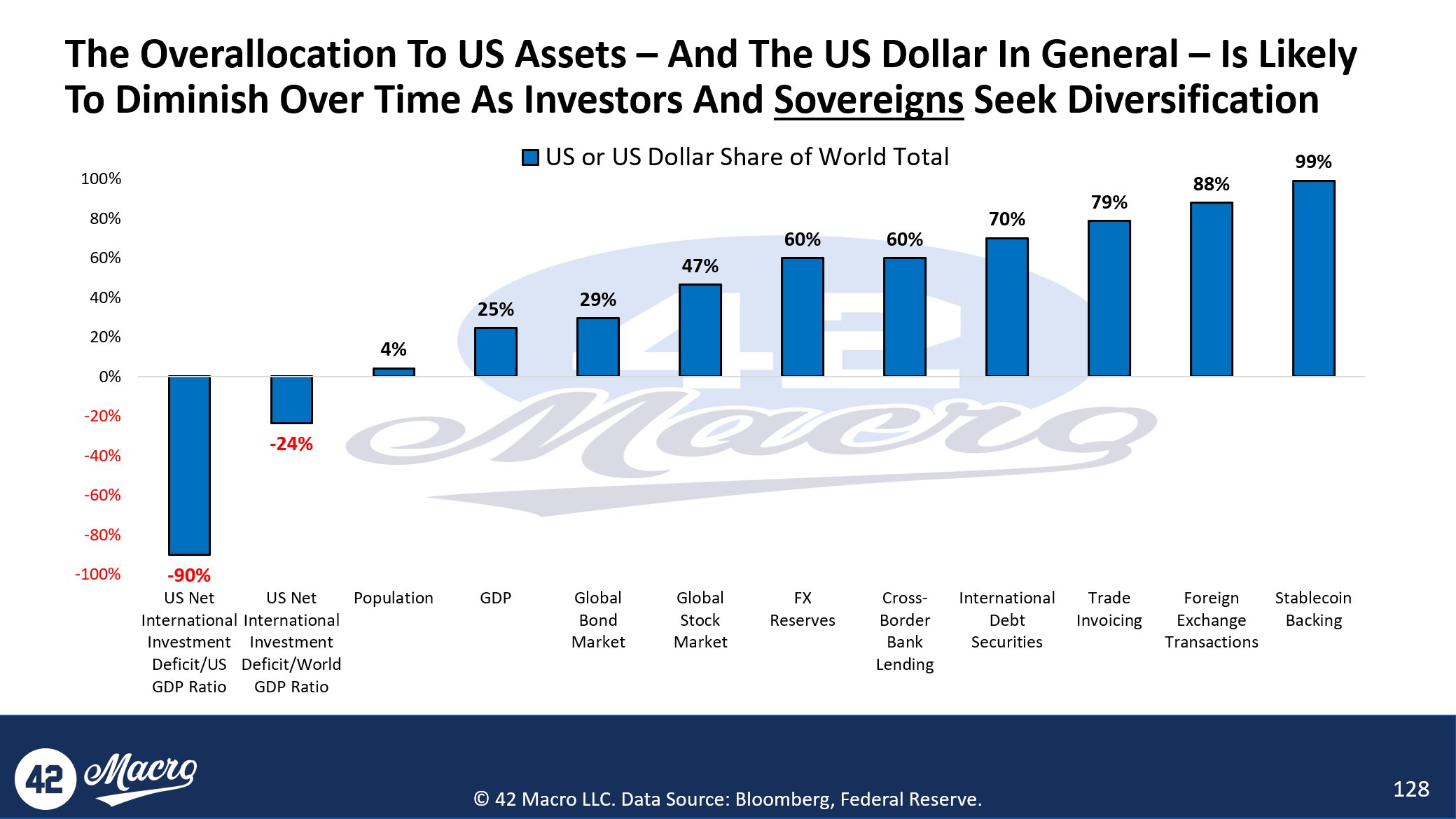
This chart shows the outsized role of the U.S. economy and U.S. dollar throughout global financial markets. The U.S.’s relatively small share of global GDP and population signals a structural imbalance and suggests that this over-allocation may gradually decline as investors and sovereigns diversify.
Successful Signals From Dr. Mo
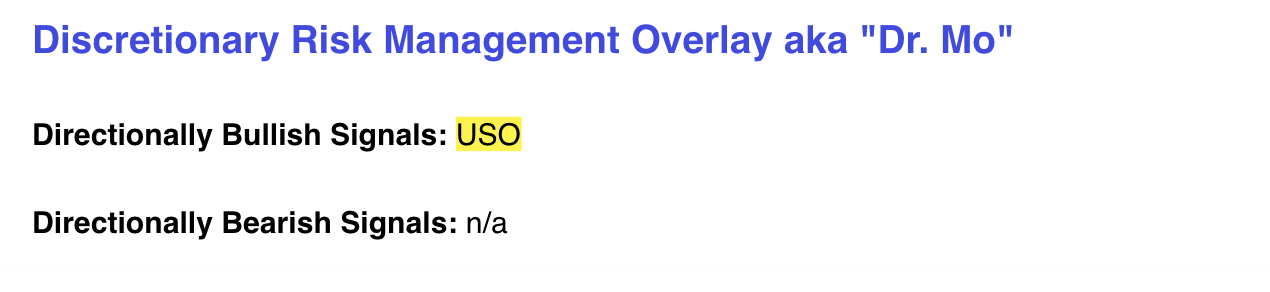
On January 28, 2026, our Discretionary Risk Management Overlay signaled a bullish breakout in Crude Oil ($USO). Since the pivot, $USO has appreciated 80%.
Community Spotlight
This month, we’re excited to share feedback from a member of our global investor community. This long-time 42 Macro subscriber has used our KISS and Dr. Mo risk management overlays to achieve outstanding absolute returns and unrivaled risk-adjusted returns—which is precisely what they were engineered to do.
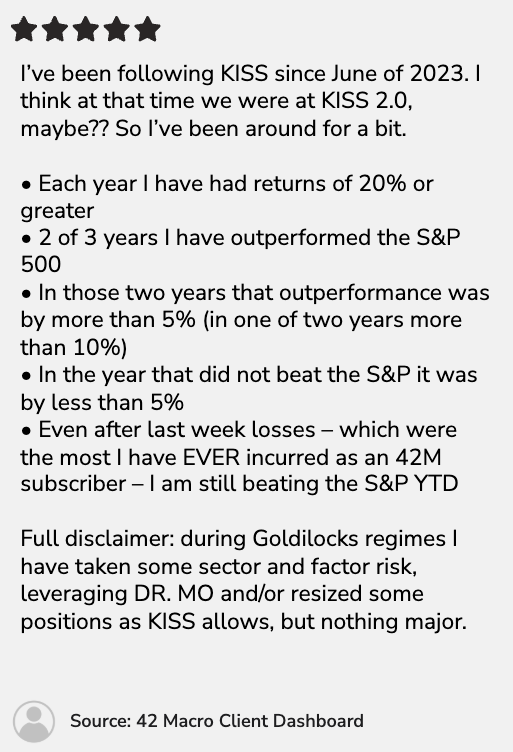
It’s always rewarding to see KISS and Dr. Mo deliver meaningful outcomes for investors around the world. We truly appreciate your feedback.
EXPLORE 42 MACRO RESEARCH